Dr. Gymbro
←

#blood lactate

1 article
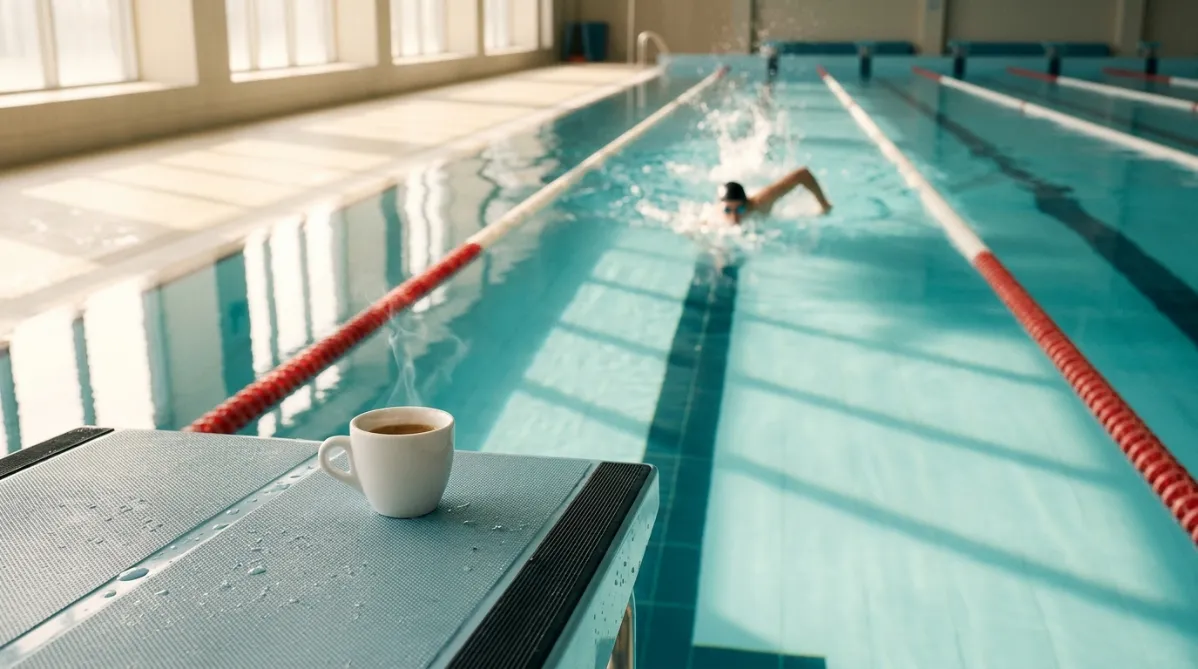
A wide, editorial-style photograph of a competition swimming pool lane seen from just above the water line at the starting end, in soft morning light. In the foreground, on the pool deck, a white ceramic espresso cup sits on the edge of a blue-gray starting block, a thin curl of steam rising from it. The cup is in crisp focus, with a few droplets of water on the textured non-slip deck around it. Behind it, the pool stretches into the distance as a series of calm lanes divided by red and white lane ropes. The turquoise water glints with gentle ripples and long, shimmering reflections. At the far end, a lone swimmer in a dark cap and goggles is mid-stroke, caught in a small burst of white splash, and slightly out of focus because of the shallow depth of field.

Large windows along the side wall let in pale golden sunlight, which throws soft diagonal light across the water and the deck. The palette is clean and modern: aqua, deep teal, warm cream and a small accent of coffee brown. The cup's warm tones stand out against the cool blues. The composition follows the rule of thirds, with the cup in the lower left third and open negative space of water and light on the right, leaving room for headline text. The look is minimal, airy and contemporary, like a high-end sports and science magazine, with subtle film grain, natural color grading, and a slightly desaturated, calm mood. Faint stopwatch-like details appear only as a thin black timing pad edge on the starting block, with no text or numbers visible. The overall feel is quiet anticipation just before a race, precise and fresh, with a sense of small margins and measured performance.
nutrition

Koffein macht Schwimmer schneller – aber weniger, als man denkt

BY DR. GYMBRO ·

Schwimmer trinken seit Jahren vor Wettkämpfen Kaffee, doch macht das sie wirklich schneller? Eine neue mehrstufige Meta‑Analyse von 13 Crossover‑Studien setzt den Leistungszuwachs auf etwa 1,7 %, ein bedeutsamer Vorsprung in einem Sport, der über Hundertstelsekunden entschieden wird. Überraschend ist, dass der klarste Nutzen bei 6 mg/kg oder mehr zu beobachten war, während niedrigere Dosen keinen überzeugenden Effekt zeigten. Koffein erhöhte zudem den Blutlaktatwert nach dem Rennen, und die Ergebnisse variierten stark zwischen den Studien. Im Folgenden wird gezeigt, was die Evidenz belegt und welche Fragen offen bleiben.

This page is available in